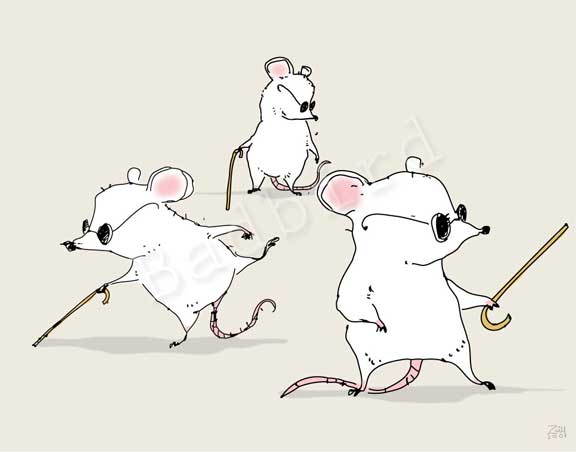
There is no great genius without a streak of insanity.
I used to think that Seneca meant eccentricity. Crazy white hair and all that. But maybe not.
Dementiae: de = without; ment = mens = mind. Without mind. Mens or Bona Mens was the personification of thought, or "right-thinking" in Roman mythology. Mensa wanted to be called Mens (but the similarity to Men's probably led them to shun the idea; imagine the feminists' outcry). The absence of right-thinking. Actual madness. Or, in modern terms, mental problems.
I suppose it is very easy to romanticize the idea of insanity. To imagine a state where nothing is under your control and your thoughts race ahead of you or to harbour the feeling of deep darkness, of perpetual sorrow (like the modern Goths and their make-up). But to be in the thick of it. To feel it clawing at your throat. To hate yourself for being immobilized but not finding the will to move. To be tortured into finding ways of expelling it from the wreck that is your life. Perhaps if I write, sing, dance, work, paint, build...
Seneca also quoted a friend in the same text: liquando et insanire iucundum est, "sometimes it is a pleasure to also go crazy" and frustra poeticas fores compos sui pepulit, "in vain did the sane mind knock on the doors of poetry." So, to him, it is good to be a little crazy sometimes. Perhaps he did mean eccentricity after all. Run around naked on the field sometimes. It does your soul some good.
The keyword here is "sometimes". Choice is absent for true madness.
Wednesday, June 12, 2013
Thursday, July 19, 2012
Midnight Exchange
I lift it all up to
You, my Lord.
The discussions that I had with M last night was fruitful. To me,
at least. And maybe in helping him understand my thoughts. I know so very
little about Your works, and fail to discuss anything to complete satisfaction.
It is very frustrating.
The things we talked about. How do we see Your works in
the world, when the way we see it can easily stem from a logical fallacy? This
good thing has happened, therefore I rejoice because the Lord has done it. This
bad thing has happened, therefore I rejoice because the Lord has done it to
train me up. Anything can be from You. It is ultimately unfalsifiable. Why does
it make more sense to believe that You are present? My heart says you are, but
my mind cannot find proof. But that is what my mind needs to do. To find reason. To boldly start from no assumptions.
If God wasn’t there, would this still have happened? Would all this? I don’t think
we can ever establish or disprove that claim. And I blame it on the chaotic nature
of the systems in this world.
Perhaps, the discussion can be boiled down to
this: why do I believe in God. Why should I believe in this entity? What is my
reason? Because He called me when I was still a child. And my entire life has
been centred upon His will. He called, and His call was impossible to ignore.
He is the tug of my conscience, the searing pain in my soul when things were
not according to His will, the force behind decisions which I dread (like to
hang out with people and to go through with bible study), and the gritting of
my teeth when I close my eyes and throw myself into conflicts.
And this is
probably what we can ever hope for in terms of evangelism. The hope that He
will call, and that the one He calls will have a softened heart. Can we do
anything at all??? Perhaps that is why my heart detests hypocritical acts. It
detests inactivity when there should be activity. It also detests activity when
there should be inactivity. I can only move when He calls me to move.
Everything, even cooking in church. Even things that seem to be quite
appropriate and “holy”. We are mere vessels of salvation. Mere vessels.
But oh well, the hunt
continues. Why should I believe in God?
But I have no fear in questioning my
faith. If God is true, then He will be able to withstand scrutiny. He will not
let me go astray. It is probably even my
duty to figure out my faith, for blind faith is deadly. It is deadlier than no
faith.
Friday, June 15, 2012
What to do with Freud?
I suppose I jumped onto the Freudian bandwagon without
thinking twice when I was younger. And now I’m stuck with this odd little
dilemma. What should we make of “parent bashing” (as Lilienfeld likes to say)?
Was he completely wrong? I think we should always stand on centre ground. It’s
a big cliché but we must listen to all sides before coming to a judgement –
yes, even to people who commune with sagacious beings in Mars.
I don’t think we
should ignore the effects of parenting on children. I think that is still
important. In “Unstrange Minds” by Grinker, he describes the experiments by
Harlow with a certain distaste (pointedly noting that the experiments bordered on
animal cruelty). In brief, Harlow studied the effects that abnormal mothering
can have on baby rhesus monkeys. He replaced the mother with mechanical monkeys
made of wire, cloth, with and without milk bottles etc. His results showed that
monkeys deprived of their mothers were emotionally disturbed.
Now, does this
actually lend proof to Freudian ideas, as Grinker claims it did? Does it support the idea that bad
mothering can cause crazy children? Yes and no. I think we should look at this
clearly. What Harlow did was to provide a very distressing upbringing
environment to the baby monkey. The baby has more or less been orphaned. So, I
think parents who don’t provide the basic necessities and at least some sort of
attention, and who abuse their children will increase the chances of emotional
and psychological problems.
But, I think the effects will be small beyond such
extreme conditions. Whether your dad was stricter than usual, or your mum was
more controlling. I don’t think these are the causes for psychopathologies. But
they will probably have some sorta effect on the person as a whole. Take for
example a series of experiments by Meaney and colleagues. They basically
compared the difference between rat mothers that gave high and low levels of licking,
grooming and arched-back nursing (LG-ABN) to their pups. What they found was
that the children of rat mothers which gave low levels of LG-ABN showed higher
stress reactivity. There is a lot more to this series of experiments and its
implications are many. However, for the purpose of this topic, suffice to say
that the behaviour of parents does affect the behaviour of their children. But,
from these studies, it seems that the effect is not enough to account for huge
modifications in personality, and certainly not enough for pathologies as the
offspring of low LG-ABN mothers still exhibited normal behaviour.
So, just to
summarise: in my opinion, children brought up in terrible conditions may turn out to be psychopathological (note that they are at higher
risk and not guaranteed to be dysfunctional), but other less extreme conditions
(e.g. when the child begins toilet training, when they start sleeping alone
etc.) will probably not push a person over the edge.
Sorry Frasier! But Freud’s out the window for me.
But I still think he's cool.
Wednesday, June 13, 2012
Head over heels, again.
The uncle suggested that I compile these blog entries into a book. Ahaha.. flattery gets one everywhere. Nonetheless, the email jolted me out of hibernation. I guess I do have something to write about nowadays. Something meaningful, I mean. For the third time in my life, I am head over heels in love. No, no, not like that; the ginger is still in the picture. I am in love with the boys in the autism lab. And like so many people in love, I'm starting to bore others with stories of "just how cute they are!". But maybe "beautiful" is the better word to describe them. Beautiful faces, stunningly long lashes. I am tempted to start a study to measure the average length of the eye-lashes of autistic individuals. 18 data points right here.
The more time I spend with the boys, the more I lean away from the idea that autism is fundamentally a problem with social interactions. I think it is a linguistic problem. The inability to acquire language naturally like normal kids. And I don't think it is coincidental that so many are diagnosed around the time when kids begin to acquire language at a frighteningly rapid pace. I'm not saying that the problems starts at that point in time, I'm just saying that problems become obvious when people start realising their kids are not talking. The social aloofness and the inability to comprehend the intentions of others might be a by-product of an even more fundamental language problem.
But imagine this. Someone not being able to represent their thoughts properly with language. From birth. How will you order the world? How will you understand what is going on around you, especially when it comes to social interactions? Social interactions are completely dependent upon language. Without a structured, systematic way to represent happiness, anger, sadness, sky, moon, sun and so on, how will you be able to learn about the world?
There are other problems as well, but fundamentally, the inability to pick up language in the normal way might play a huge role in causing autism. And I can tell you this for certain. Once the kids are familiar with someone, and can vaguely understand what you're doing/saying, then they crave for contact. They are able to connect with people. They are not walls.
I, myself, loved taking afternoon strolls with one of the boys. That was our secret activity together. And he used to pretend that he needed to go to the toilet (which was quite far from the classroom) so that I would have to take him out and we usually took the long way round back to the classroom.
The more time I spend with the boys, the more I lean away from the idea that autism is fundamentally a problem with social interactions. I think it is a linguistic problem. The inability to acquire language naturally like normal kids. And I don't think it is coincidental that so many are diagnosed around the time when kids begin to acquire language at a frighteningly rapid pace. I'm not saying that the problems starts at that point in time, I'm just saying that problems become obvious when people start realising their kids are not talking. The social aloofness and the inability to comprehend the intentions of others might be a by-product of an even more fundamental language problem.
But imagine this. Someone not being able to represent their thoughts properly with language. From birth. How will you order the world? How will you understand what is going on around you, especially when it comes to social interactions? Social interactions are completely dependent upon language. Without a structured, systematic way to represent happiness, anger, sadness, sky, moon, sun and so on, how will you be able to learn about the world?
There are other problems as well, but fundamentally, the inability to pick up language in the normal way might play a huge role in causing autism. And I can tell you this for certain. Once the kids are familiar with someone, and can vaguely understand what you're doing/saying, then they crave for contact. They are able to connect with people. They are not walls.
I, myself, loved taking afternoon strolls with one of the boys. That was our secret activity together. And he used to pretend that he needed to go to the toilet (which was quite far from the classroom) so that I would have to take him out and we usually took the long way round back to the classroom.
Saturday, June 25, 2011
Leaving Oxford
There is something strange about this parting, because I'll not actually be gone until August. But still, tonight is the last night of my degree. The city sleeps, while I sit here in my room packing odds and ends away. I wept profusely earlier this afternoon after listening to the soundtrack of Brideshead Revisited, and I thought it was because one of my friends was leaving tomorrow. But then I realised it was for this city. I will not return to this place as a student, as a trainee of life. The magic of Oxford holds only for those who are still hacking away at the giant wall of ignorance within the city walls. And tonight, I'll be politely but firmly escorted out of the ivory tower. Gone are the days of carefree strolls around the lake, or listening to the sea of ancient trees and leaves in the wind like the crashing of waves. Gone are the days of playing a vicious game of Monopoly before bed, or of punting at negligible costs. Gone are the days of having a pint in the Eagle and Child while wondering where Tolkien used to sit, or the endless discussions about everything and nothing, about God and life, and truth and love, and other people. The joys of student life lie in its freedom. At this point in life, one's mind is at its peak but one is also without the burdens of tiresome living. One is only expected to sit and learn, to observe and form ideas about the universe, to think and explore. I do not know what lies ahead, and I think when I leave, I'll never return to its warm embrace. But, maybe, maybe. Maybe I'll return in a different way, and live a different life in this gorgeous place. Perhaps, it is better to look at it in a different light, through different eyes. Perhaps, that is what's meant for me. Perhaps.
Labels:
graduation,
leaving,
night,
Oxford
Location:
Beaumont St, Oxford, Oxfordshire OX1, UK
Wednesday, June 30, 2010
Shakespeare's Wife
This is one gorgeous book.

Admittedly, the title might turn some people away coz it sounds like a romance fiction about Shakespeare's love life but it's SO not.
It IS about Shakespeare's wife.
The author is a proper historian who digs through tax records, marriage records, burial records, birth certificates, letters etc to unearth the hidden life of Shakespeare's little known domestic life.
It seems that most people believe Ann Shakespeare to be a prototypical shrew, mainly because:
1. William showed no sign of overt affection towards her anywhere in his writings (letters and all)
2. Ann was 8 years older than Will and was 26 when she got married hence was an old maid desperate to nab the first impressionable youngster who passed her way
3. William was driven away by her to London for most of their marriage
4. William was gay (ref. the Sonnets written to a young man)
5. William was supposed to marry another younger woman whom everyone knew was prettier, gentler, kinder and more civil but who couldn't match up to Ann's amazing cunning when it came to trapping a husband.
Well, Greer, and I, don't think she was like that at all.
Greer starts off by giving a general overview of the Ann's and Will's background. Ann Hathway alias Gardner was the daughter and heiress of a rather wealthy farmer in Stratford. She lived in a close-knitted community where everyone knew everyone, and she probably helped her stepmother to run the farm when her father died, hence she was a skilled worker. Her family was quite influential in that region and well respected, therefore it is unlikely that she needed to worry about finding a match. She probably had suitors or matches might have already been made for her by her elders since young. Furthermore, 26 was the norm for getting married in Tudor England so she was hardly desperate. The picture painted here is of a country who led a steady, quiet, predictable and comfortable life.
William, on the other hand, was the son of a glovemaker whose business went bust. Greer attributed this to his mother's desire for status in society thereby prompting her husband to focus on gaining power rather than on his glovemaking business. It was the wife's role to run the family business if the husband's away or otherwise preoccupied. However, seeing as Mary was the pampered youngest daughter of rich farmer, it was understandable that she didn't want to muck around in the glovemaking industry. So, Will's family was quite poor and quite in debt. The family wasn't able to equip him with any skill other than reading and writing. In Tudor England, Will was quite useless.
In this light, it's quite easy to see that it was a step down for Ann to marry Will. She, who was supposed to marry a young man with his own farm, married a boy who could only paint fantasies with words.
That's such a refreshing image of Ann Shakespeare.
Greer goes on to show that Will didn't "run away" from Stratford to escape Ann. In fact, he probably left with her blessings else there were many actions that Ann or her family could've taken against Shakespeare for abandoning his family--a serious offence in those times. She probably thought that it was easier to raise the children by herself and send Will off to London where his talents might be of some use.
She was also an exceptional mother, able to fend her three young children against the plague, several harsh winters and droughts (and this was when her husband was still struggling to settle in London). She ran her own little malt-making factory in New House, placing her quite high up on the ranks of housewives. She was also respected and well-trusted as people left money with her for safe-keeping.
And my favourite image of Ann can be none other than the one of her reading the first compiled publication of Shakespeare's sonnets. Amongst the 154 sonnets, amidst those written to a young man, were those written to an old love. The tone of those sonnets was apologetic, almost regretful and mostly thankful for the loyalty shown by the old lover. Who else can this old love be but Ann Shakespeare? In fact, Ann probably read through the sonnets and chuckled at few, recognising them as the love tokens Will wrote to her during their courtship. Or maybe Will read them out to her before penning down the final draft.
It's just impossible to imagine Ann as a bitter old shrew. I'd rather imagine her to be a comfort and support, the rock of reality that William Shakespeare relied upon through his hectic days in London. It's much nicer that way. Nice to dispel the myth that women were completely cutoff from the lives of great talents. Nice to show that the "wife and best friend" is not a modern concept but one as old as Adam and Eve. And it's good that there's proof of it.
Wednesday, March 10, 2010
Updates 2010
Let's just say that I've been wandering in wilderness and leave it at that.
I have also completely forgotten when and what I wrote in the last blog entry, and yes, I'm too lazy to check.
Borrowed a book called Born Digital today from the insanely obscure/geeky Oxford Internet Institute. Hopefully I got the right book. And yes, I am yet again too lazy to trawl through nine hours of Economist audio recordings to double check that I've gotten the right book. It's the right topic anyhow.
Updates. Updates. Updates.
I've been cooking in church for the last two terms. really fun. I mean, cooking for 80 is NO MEAN FEAT! the pots're HUGE. they have one special wooden spoon that's long enough for the big pot. picture macbeth. hear bubbling. but do not picture green oozing liquid. picture instead lumps of raw meat. enough to feed eighty. urgh... imagine feeding five thousand people and actually having to cook it!
The mist has cleared. Everything's geared towards clinical psychology now. but....no luck so far with getting work experience. sighs...BUT lotsa luck with the volunteer orgs. Gonna go bowling with pple from Headway(google it) on Friday. oh well. And there's another one called Tandem. They seem interesting. Dunno whether I should volunteer in the JR as well...maybe warneford will be better. And this is where the internet fails big time. obmh.nhs.uk is permanently inaccessible. urgh. The ONE website i absolutely need.
what else.
Oh Part I exams at the start of next term. That's the first part of my degree and the first public examination that actually counts. 5 papers in total i think. Tons and tons of reading.....
For Part II next term (i'm technically a 3rd yr next term), I'll be doing Mood and Anxiety Disorders, and Conscious Awareness. And a research project. And 24 hrs of practical. And, of course, my beloved Physiology.
I got an iPod nano! finally. an iPod that's mine. admittedly, it's a 2nd Gen. But hey I think the design's much better than 3rd Gen and who needs video on a 2 inch screen anyway.
I'm also reading a book on Dream Theater called Lifting Shadows.It's Marcus' xmas present from me to him. And I'm reading faster than him. So the pink post-it is ahead!
I don't even know why I'm in such a bleak mood right now. Maybe it's the pile of paper on my table. I seriously need to sort them out.
I also had a magical moment. One evening. Just before the sun set. I was just sitting there, and I thought: I've finally finished growing up. Like. I feel complete, for once. Whole. I might have these horrible mood swings and intolerable grumpiness but it's all fine. I'm fine. I can deal with it. I know how to. That's not to say I've stopped growing or whatnot. It's like I'm finally ready to move on. The sunset helped.
I've read somewhere that maybe the torturous teen years are caused by an ill-defined boundary into adulthood. This sense of closure, beginning and readiness. To know that we are ready for adulthood, with all its responsibilities, that it's difficult but that it's fine because everyone else knows it too. Right now, teens are just chucked somewhere in between. No transition. Nothing clear cut. Then somewhere along the lines they'll settle down. The problem with that is the uncertainty. Like what the heck are we supposed to do meanwhile?? Increasingly I think that humans are made to perceive things categorically. It's an obvious thought but hey somehow we still think it's OK to leave important things ambiguous. Like whether someone likes someone or not. IF ONLY we had a system where the guy can just, i dunno, give the girl a flower or sth. I mean. puh-lease.... the uncertainty can drive a person mad! and I've only experienced it for two weeks. Even then it was with more certainty than most. And a huge distractor.
Oh well. turns to pile of paper. OHO. I see the tell-tale diagrams of the hippocampus. Means it's behavioural neuroscience. The hippocampus' like...the CPU, while the rest of the cortex is like the larger hard drives.
CYC signing off!

I have also completely forgotten when and what I wrote in the last blog entry, and yes, I'm too lazy to check.
Borrowed a book called Born Digital today from the insanely obscure/geeky Oxford Internet Institute. Hopefully I got the right book. And yes, I am yet again too lazy to trawl through nine hours of Economist audio recordings to double check that I've gotten the right book. It's the right topic anyhow.
Updates. Updates. Updates.
I've been cooking in church for the last two terms. really fun. I mean, cooking for 80 is NO MEAN FEAT! the pots're HUGE. they have one special wooden spoon that's long enough for the big pot. picture macbeth. hear bubbling. but do not picture green oozing liquid. picture instead lumps of raw meat. enough to feed eighty. urgh... imagine feeding five thousand people and actually having to cook it!
The mist has cleared. Everything's geared towards clinical psychology now. but....no luck so far with getting work experience. sighs...BUT lotsa luck with the volunteer orgs. Gonna go bowling with pple from Headway(google it) on Friday. oh well. And there's another one called Tandem. They seem interesting. Dunno whether I should volunteer in the JR as well...maybe warneford will be better. And this is where the internet fails big time. obmh.nhs.uk is permanently inaccessible. urgh. The ONE website i absolutely need.
what else.
Oh Part I exams at the start of next term. That's the first part of my degree and the first public examination that actually counts. 5 papers in total i think. Tons and tons of reading.....
For Part II next term (i'm technically a 3rd yr next term), I'll be doing Mood and Anxiety Disorders, and Conscious Awareness. And a research project. And 24 hrs of practical. And, of course, my beloved Physiology.
I got an iPod nano! finally. an iPod that's mine. admittedly, it's a 2nd Gen. But hey I think the design's much better than 3rd Gen and who needs video on a 2 inch screen anyway.
I'm also reading a book on Dream Theater called Lifting Shadows.It's Marcus' xmas present from me to him. And I'm reading faster than him. So the pink post-it is ahead!
I don't even know why I'm in such a bleak mood right now. Maybe it's the pile of paper on my table. I seriously need to sort them out.
I also had a magical moment. One evening. Just before the sun set. I was just sitting there, and I thought: I've finally finished growing up. Like. I feel complete, for once. Whole. I might have these horrible mood swings and intolerable grumpiness but it's all fine. I'm fine. I can deal with it. I know how to. That's not to say I've stopped growing or whatnot. It's like I'm finally ready to move on. The sunset helped.
I've read somewhere that maybe the torturous teen years are caused by an ill-defined boundary into adulthood. This sense of closure, beginning and readiness. To know that we are ready for adulthood, with all its responsibilities, that it's difficult but that it's fine because everyone else knows it too. Right now, teens are just chucked somewhere in between. No transition. Nothing clear cut. Then somewhere along the lines they'll settle down. The problem with that is the uncertainty. Like what the heck are we supposed to do meanwhile?? Increasingly I think that humans are made to perceive things categorically. It's an obvious thought but hey somehow we still think it's OK to leave important things ambiguous. Like whether someone likes someone or not. IF ONLY we had a system where the guy can just, i dunno, give the girl a flower or sth. I mean. puh-lease.... the uncertainty can drive a person mad! and I've only experienced it for two weeks. Even then it was with more certainty than most. And a huge distractor.
Oh well. turns to pile of paper. OHO. I see the tell-tale diagrams of the hippocampus. Means it's behavioural neuroscience. The hippocampus' like...the CPU, while the rest of the cortex is like the larger hard drives.
CYC signing off!

Subscribe to:
Posts (Atom)